AC/DC Adapters
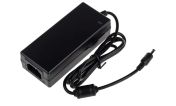
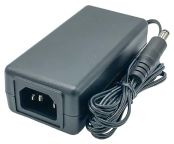
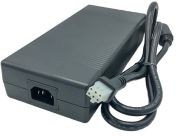
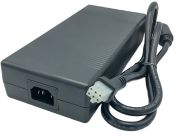
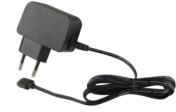
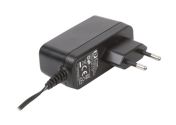
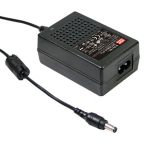
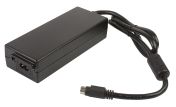
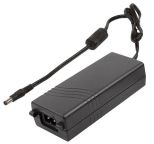
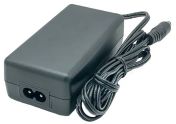
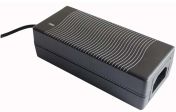
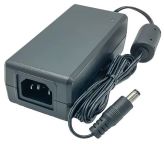
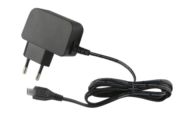
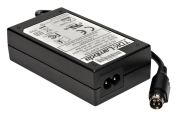
An AC/DC adapter, or plug-in power supply, is an electrical device that takes input power from a mains power supply and converts or derives the right current, frequency and voltage to power the component it is attached to. Main power supplies provide power to devices that run on batteries or have no other power source. These are suitable for applications such as chargers, set-top boxes, motor control and other office automation products. A plug-in power supply resides outside the main unit, unlike a computer power supply which is internal. You can learn more in our guide to AC/DC adapters.
For popular Raspberry Pi power supplies, visit our sister site OKdo.com and all thing Raspberry Pi and SBC.
How does an AC/DC adapter work?
An AC/DC adapter is made up of a central unit which draws power from an AC outlet, it then converts the power to DC that is used to charge the device. Each AC adapter has a specific power rating, measured in volts or watts that it can handle and the output of a device. Because of the power rating and the type of plug on the end, an AC adapter is not universal and can only be used with devices with the same requirements and connector.
International Plug Power Supplies
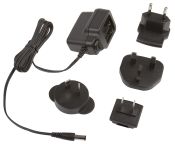
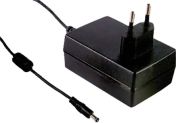
Some plug-in power supplies come with interchangeable input connectors that you can swap when traveling to areas with different plug types such as the United Kingdom, USA, Europe, Japan and Australia. They may also come with protection features such as short circuit, over voltage and overload to suit the international safety approvals making them ideal for the global marketplace.
Are all AC/DC Adapters the same?
It is possible to use a power adapter on different devices, but it's important to check whether it's AC or DC output. Using close to, if not exactly the correct voltage and Amperage. If you're unsure it might be worth investing in a universal power adapter with lots of different plug fittings.
2924 Products showing for AC/DC Adapters
Stock information currently inaccessible
Subtotal (1 unit) CHF.27.99(exc. VAT) CHF.27.99/unit |
Stock information currently inaccessible RS Better World
Subtotal (1 unit) CHF.15.98(exc. VAT) CHF.15.98/unit |
Stock information currently inaccessible RS Better World
Subtotal (1 unit) CHF.100.88(exc. VAT) CHF.100.88/unit |
Stock information currently inaccessible RS Better World
Subtotal (1 unit) CHF.100.88(exc. VAT) CHF.100.88/unit |
Stock information currently inaccessible
Subtotal (1 unit) CHF.12.02(exc. VAT) CHF.12.02/unit |
Stock information currently inaccessible
Subtotal (1 unit) CHF.18.47(exc. VAT) CHF.18.47/unit |
Stock information currently inaccessible RS Better World
Subtotal (1 unit) CHF.15.44(exc. VAT) CHF.15.44/unit |
Stock information currently inaccessible
Subtotal (1 unit) CHF.11.96(exc. VAT) CHF.11.96/unit |
Stock information currently inaccessible
Subtotal (1 unit) CHF.72.44(exc. VAT) CHF.72.44/unit |
Stock information currently inaccessible
Subtotal (1 unit) CHF.30.17(exc. VAT) CHF.30.17/unit |
Stock information currently inaccessible
Subtotal (1 unit) CHF.21.94(exc. VAT) CHF.21.94/unit |
Stock information currently inaccessible
Subtotal (1 unit) CHF.7.15(exc. VAT) CHF.7.15/unit |
Stock information currently inaccessible
Subtotal (1 unit) CHF.9.46(exc. VAT) CHF.9.46/unit |
Stock information currently inaccessible
Subtotal (1 unit) CHF.48.73(exc. VAT) CHF.48.73/unit |
Stock information currently inaccessible RS Better World
Subtotal (1 unit) CHF.24.70(exc. VAT) CHF.24.70/unit |
Stock information currently inaccessible
Subtotal (1 unit) CHF.13.63(exc. VAT) CHF.13.63/unit |
Stock information currently inaccessible
Subtotal (1 unit) CHF.27.99(exc. VAT) CHF.27.99/unit |
Stock information currently inaccessible RS Better World
Subtotal (1 unit) CHF.24.70(exc. VAT) CHF.24.70/unit |
Stock information currently inaccessible
Subtotal (1 unit) CHF.9.52(exc. VAT) CHF.9.52/unit |
Stock information currently inaccessible
Subtotal (1 unit) CHF.69.63(exc. VAT) CHF.69.63/unit |